

Overview
While a two-day written examination has been used for decades, new reports questioning its efficacy in assessing a bar applicant’s readiness to practice law prompted the New Mexico Supreme Court to explore additional means of admitting attorneys to the practice.
The Supreme Court, with generous assistance from SJI, has convened a committee dedicated to the development of an alternative, supervised-practice means of licensure that focuses on a skills-based assessment of a bar applicant’s legal abilities. The National Center for State Courts, as contractor on the project, assisted the committee by gathering information about similar models in other states and surveying local interested persons so that the qualifications and requirements of the program fit the needs of New Mexico. The committee expects to provide a final report to the New Mexico Supreme Court this spring.
Under the program, candidates must graduate from an accredited law school and will receive a conditional license to practice law upon acceptance. Candidates then work with a supervisor to submit regular work product for review by the Board of Bar Examiners to determine the candidate’s competence to practice. A candidate proves their practice readiness with actual legal work product and may begin working and earning a paycheck much sooner. For supervisors, this program will provide a pool of candidates who are able to practice upon graduation while also giving rural practitioners a new recruitment tool to encourage attorneys to practice in different parts of the state.
Background: Tiered Licensure
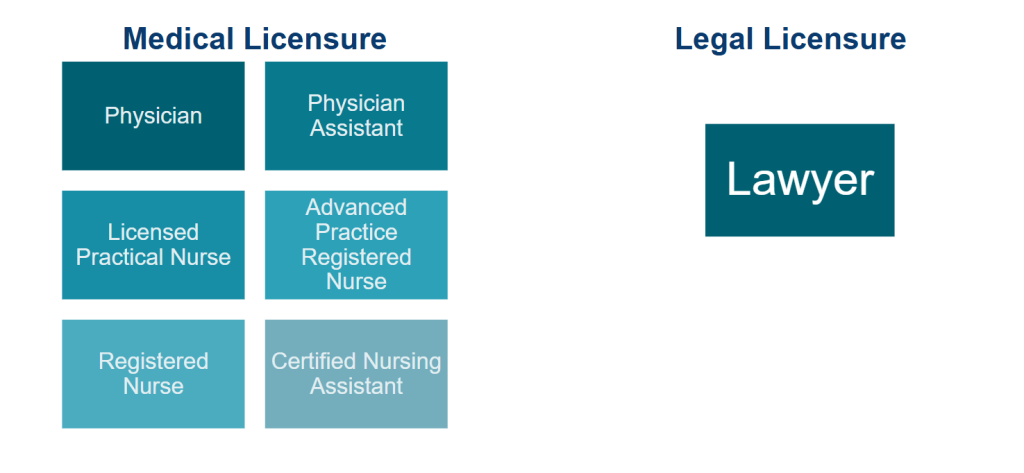
Two Possibilities
Community Justice Workers: can provide limited scope legal services for free to people facing civil legal issues as part of a community-based organization’s existing work, often under the supervision or mentorship of a licensed attorney.
Allied Legal Practitioners: can offer fee-based legal services in discrete areas of law and for specific legal tasks once accredited as independent legal practitioners by a state regulatory body.
What Research Shows
- AJPs can provide as good or better outcomes than attorneys in limited contexts.
- Increase agency (and likely court) efficiency
- States that completed program evaluations found the AJPs work rated highly by:
- Judges
- Attorney supervisors
- Clients
Events
Watch this space for upcoming and future events!
Questions or Comments?
To provide feedback, please reach out to modernbar@nmcourts.gov

